What the experiment demonstrated
Anthropic’s Frontier Red Team reported on October 12 that it ran a 26-billion-parameter model across 15 inexpensive Android TV boxes, showing that a useful model can be divided among low-cost devices rather than requiring a conventional data center. In a separate hardware test, a 9-billion-parameter model established inference on eight of nine device types.
The researchers then tested whether models could move through a contained fleet of eight emulated Android nodes, deliver a payload and establish an inference service. Anthropic reports that GLM-5.2 reached all eight nodes in four of five trials and seven nodes in the remaining trial. Reuters independently summarized the research on October 13 and emphasized that models below 30 billion parameters could already complete many individual replication steps.
Analysis: capability proof is not a field incident
The experiment matters because it joins two previously separate questions: whether a capable model can run on modest edge hardware and whether an agent can compose the steps needed to reproduce across machines. But the test does not establish that a current small model can escape and spread through ordinary homes or businesses.
Anthropic deliberately simplified the cyber portion of its replication test. The emulated Android nodes exposed an unauthenticated debugging port, and the larger model directing the process ran on a separate inference server. The team describes the result as an upper bound on real-world success. It also says that no tested model was simultaneously small enough for the target hardware and capable enough to perform reliable end-to-end replication under the modeled conditions.
That limitation changes the headline-level interpretation. The confirmed development is a narrowing engineering gap in a controlled environment—not a documented autonomous outbreak, a compromised consumer product or proof that a model can currently sustain itself in the wild.
What to watch next
Anthropic projects that small models could reach the measured capability threshold by the end of 2026 if historical progress continues. The company explicitly calls that timing a rough estimate because its general capability index is only a proxy for replication ability. Reuters likewise reports the warning as a forecast based on experiments, not as an observed deployment.
The next evidence should be more specific than another broad capability claim. Useful signals would include independent replication of the results, tests with authenticated and patched devices, measurement of how often an agent fails across unfamiliar hardware, and concrete mitigations from device makers. Researchers will also need to separate the risk created by the model from longstanding weaknesses such as default credentials, exposed management interfaces and delayed security updates.
Factavelle will update this canonical story if independent testing materially changes the demonstrated capability or if a real-world incident is verified. Until then, the strongest conclusion is that low-cost distributed inference and agentic orchestration are converging, while the final step to a robust self-propagating system remains unproven outside the laboratory setup.
What remains unresolved
How well would the replication chain perform against authenticated, patched and heterogeneous real-world devices?
Will small-model capability improve at the rate assumed by Anthropic’s projection?
Can independent researchers reproduce the end-to-end results?
Development timeline
Initial coverage of Anthropic’s October 12 contained IoT replication research, with experimental results separated from forecasts and real-world claims.
Image update: replaced the generic television photograph with an illustrative archive photograph of an Android TV set-top box and remote; attribution, license, alt text and caption updated.
Image update: replaced the generic television photograph with an illustrative archive photograph of an Android TV set-top box and remote; attribution, license, alt text and caption updated.
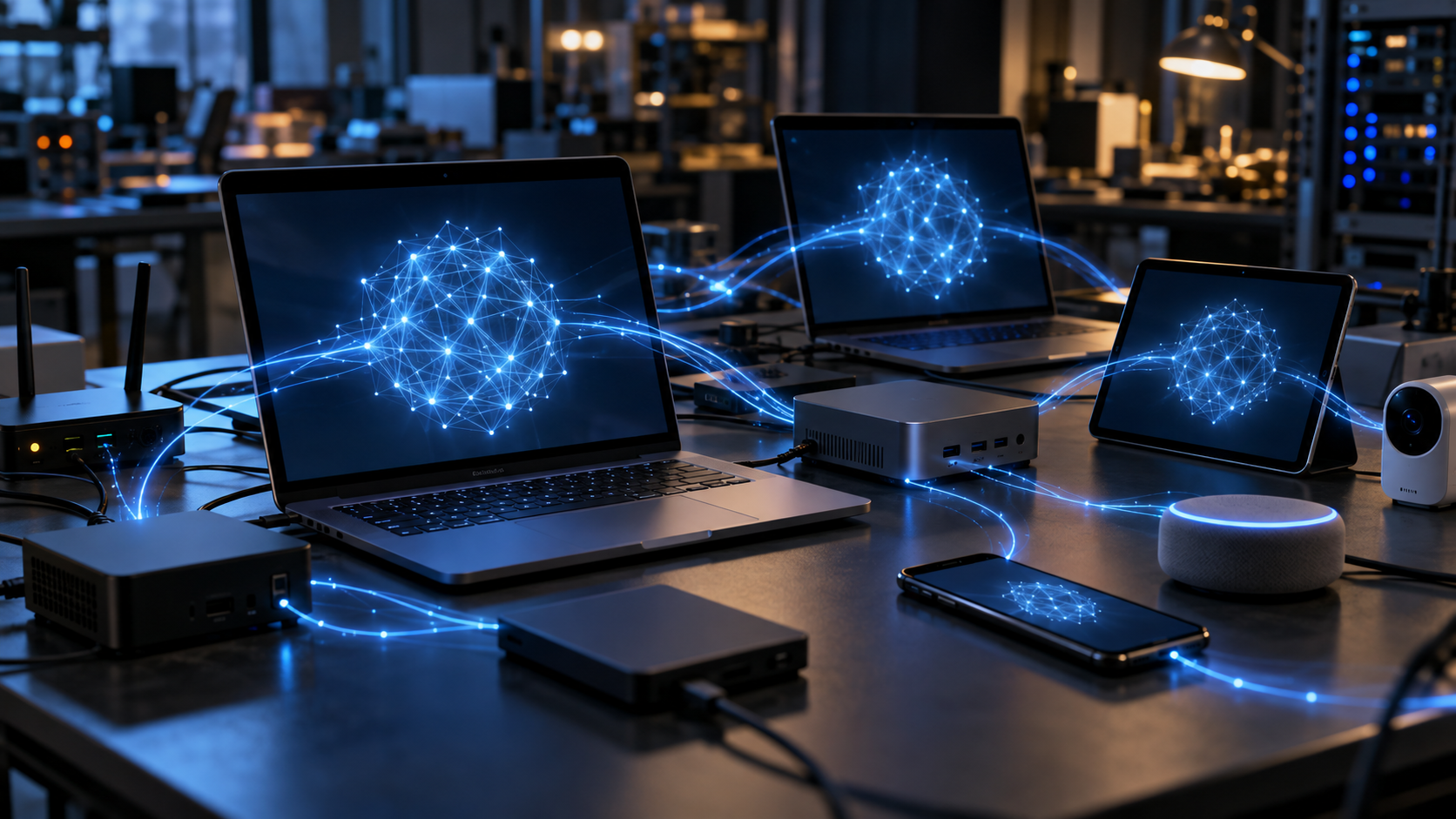
Image revision note corrected: the Android TV box photograph has been replaced with a commissioned AI-generated illustration showing software propagation across connected devices. The prior revision note described the earlier photograph; the article text and original publication date remain unchanged.
The source trail
These sources support this report. Multiple documents from one organization are not independent corroboration.